

Investor blogs and podcasts
In Kesko’s investor blogs and podcasts, Kesko’s management discusses topical issues relevant to investors and shareholders.
Technical trade in the Nordic countries offers strong potential for growth
Building and technical trade is Kesko’s second-largest division. It comprises building and home improvement trade and technical trade, each accounting for approximately half of the division’s net sales.
Kesko first expanded its operations into technical trade in 2016 when it acquired the established Finnish sector operator Onninen. As part of Kesko, Onninen’s net sales have grown by some 56% and operating profit by some 232% (2015 figures vs. 2025). Today, Kesko operates in technical trade via Onninen in seven countries: Finland, Sweden, Norway, Poland, Estonia, Latvia and Lithuania. In June 2026, Kesko announced an agreement to strengthen its technical trade business in the Nordics by acquiring Dahl companies in Sweden, Norway and Denmark.
Technical trade is fully B2B-focused wholesale of products and services related to building services engineering, industry, infrastructure and energy solutions. Kesko’s technical trade market can broadly be divided into two main segments: HVAC products, comprising solutions for heating, water, sewage, ventilation and cooling; and electrical products, which includes products and solutions for electrical installation, power generation, automation and electrical infrastructure. The customer base for technical trade comprises technical contractors, industry and infrastructure operators, and product retailers.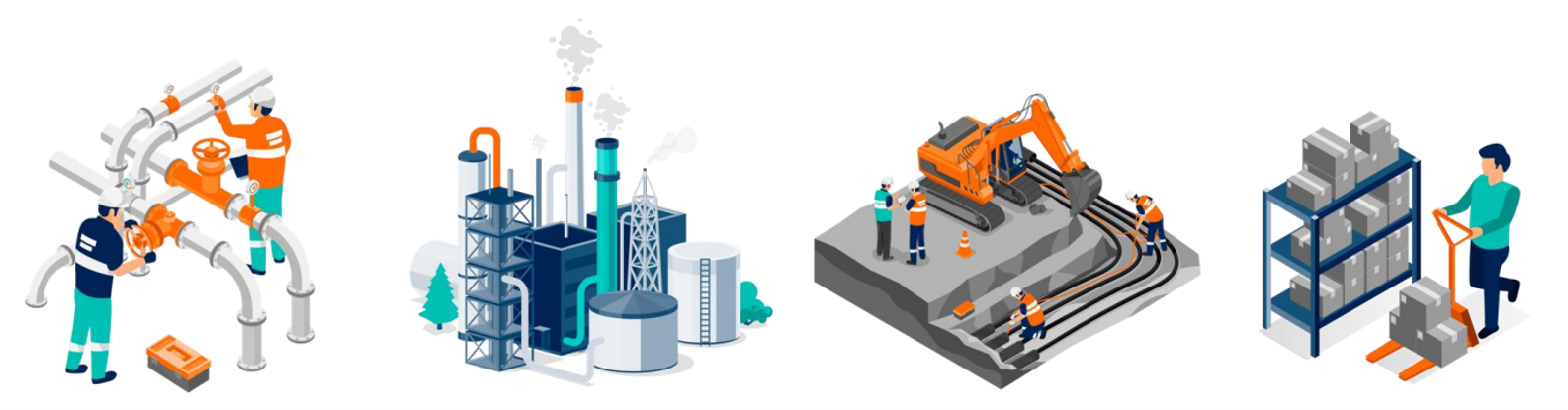
Customers for technical trade include technical contractors, industry and infrastructure operators, and product retailers
Technical trade growth drivers in the Nordic countries
Kesko sees significant growth potential in technical trade in the stable and affluent Nordic markets. Growth in technical trade is supported by various megatrends, including increasing demand for renovation building and infrastructure renewal, the green transition and tightening regulations, as well as the growing technological sophistication of buildings and construction.
Renovation building and infrastructure renewal

The need to renovate and modernise buildings as well as transport, energy, water and telecom networks supports demand for technical trade in the Nordic countries. Key drivers include the ageing of built environment, the electrification of all aspects of life, growing energy-efficiency requirements, and digitalisation. According to PwC, infrastructure investments in the Nordic countries are expected to be almost 80% higher between 2025 and 2050 than during the preceding 20-year period
Maintenance backlogs have grown particularly in transport infrastructure. In Finland, the maintenance backlog of the transport network is estimated to total almost €4.3 billion, of which around €2.6 billion relates to roads and €1.6 billion to railways. Sweden has approved a national road and rail programme worth over €100 billion for 2026–2037, while Norway’s National Transport Plan (NTP 2025–2036) allocates approximately €110 billion to transport infrastructure. Denmark has earmarked around €21 billion for transport infrastructure investments through 2035. Upgrading transport networks increases demand for products such as pipes and cables, lighting and traffic management systems, steel and concrete products used in bridges and tunnels, and civil engineering supplies.
The electrification of society and the growing share of renewable energy require substantial investment in electricity grids. According to the European Commission, electricity consumption in the EU is expected to increase by around 60% by 2030, while 40% of the distribution networks are over 40 years old. Consequently, investments of €584 billion in electricity grids are estimated to be required across the EU by the end of the decade. Meanwhile, Norway’s transmission system operator Statnett plans to invest some €13–17 billion in the transmission grid and its digitalisation over the next ten years. Building energy systems are also being extensively upgraded: buildings account for around 40% of the EU’s energy consumption, and the EU’s Renovation Wave strategy aims to renovate 35 million buildings by 2030 and at least double the annual rate of energy renovations. This is increasing demand for electrical switchboards and accessories, cabling, substations, heat pumps, heat recovery systems for ventilation, insulation and window products.
Ageing water supply and sewerage networks also require substantial investments in maintenance and renewal. Tightening environmental requirements, advances in water treatment technology, stormwater management needs and climate adaptation measures increase the need for investments. In Finland, investment needs related to ageing pipelines have been estimated to total more than €10 billion over the next 20 years. In Sweden, investment needs in water and wastewater infrastructure through 2040 have been estimated to amount to as much as €50 billion, while corresponding investment needs in Norway are estimated at approximately €35–46 billion between 2025 and 2045. Modernising water infrastructure increases demand for water and sewer pipes, pumping stations, valves and fittings, stormwater systems, and automation solutions for water treatment and network monitoring.
The growth of artificial intelligence, cloud services and the data economy is accelerating investments in digital and telecommunications infrastructure, such as fibre networks, 5G connectivity, and data centres. According to an EU estimate, the rollout of gigabit and 5G networks alone will require more than €148 billion of investment across Europe by 2030. The Nordic countries have emerged as one of Europe’s fastest-growing regions for data centres thanks to relatively low-cost renewable electricity, a cool climate, and a stable operating environment. Across Europe, data centre investments are expected to exceed €175 billion during 2026–2031. In Finland, identified data centre investments are estimated to total approximately €12 billion between 2025 and 2030. The annual Nordic market for data centre construction is expected to grow from approximately €3.5 billion in 2025 to nearly €12 billion by 2031. These projects create demand for fibre and data cabling, cable trays and installation supplies, power supply and UPS solutions, as well as cooling and ventilation systems for the data centres.
Ageing building stock is increasing demand for property renovation. In Finland, for example, the annual technical renovation need for residential buildings is estimated at almost €8 billion during 2022–2050, and the need is expected to continue growing as the building stock ages further.
Green transition and tightening regulations

The green transition and the EU Fit for 55 climate package are also boosting demand for technical trade products. The Energy Performance of Buildings Directive (EPBD) requires the phased installation of solar power systems in new and large existing buildings between 2027 and 2030, increasing demand for solar power systems and electrical products.
The electrification of transport, supported by the Alternative Fuels Infrastructure Regulation (AFIR), which requires the deployment of a comprehensive public charging network, is increasing demand for charging infrastructure, cabling, and electrical products both in buildings and public networks. The gradual introduction of mandatory environmental criteria in procurement favours suppliers that are able to offer low-emission products with documented environmental performance.
The new ETS 2 emissions trading system covering building heating, together with the Social Climate Fund worth over €86 billion, is expected to further improve the attractiveness of heat pumps and low-emission building services solutions. In the Nordic countries, this is likely to be reflected primarily in replacement and efficiency-improvement demand, as well as the replacement of remaining fossil-fuel-based heating systems. This supports sales of air-to-water and ground-source heat pumps, hybrid systems and related storage tanks and control solutions.
Increasing technological sophistication, innovation and digitalisation in buildings and construction

Buildings are becoming increasingly technologically sophisticated as energy efficiency, automation and smart building technologies continue to advance. User expectations are also rising, particularly in residential buildings. The Nordic construction sector is among the most digitally advanced in the world, and the Nordic building and automation control (BACS) market is expected to grow at around 6% annually over the next decade. Technical trade companies will increasingly provide product expertise, design solutions and value-added services to support their customers’ business.
Megatrends support growth in technical trade
The technical trade market in Kesko’s operating countries has been challenging in recent years due to lower construction volumes. Despite the market conditions, Onninen has managed to deliver good results, underpinned by, among other things, good product availability, operational efficiency, investments, and advanced digital capabilities.
In 2026, technical trade has grown in all of Kesko’s current operating countries, and the growth is expected to continue. While markets in Finland and Norway remain subdued, they have improved compared with previous years. In Sweden, Poland and the Baltic countries, markets are gradually normalising. Long-term megatrends support market growth, and once the Dahl acquisition is completed, Kesko’s position in Northern European technical trade will be even stronger.


