

Investor blogs and podcasts
In Kesko’s investor blogs and podcasts, Kesko’s management discusses topical issues relevant to investors and shareholders.
Kesko’s everyday sustainability work yields tangible results
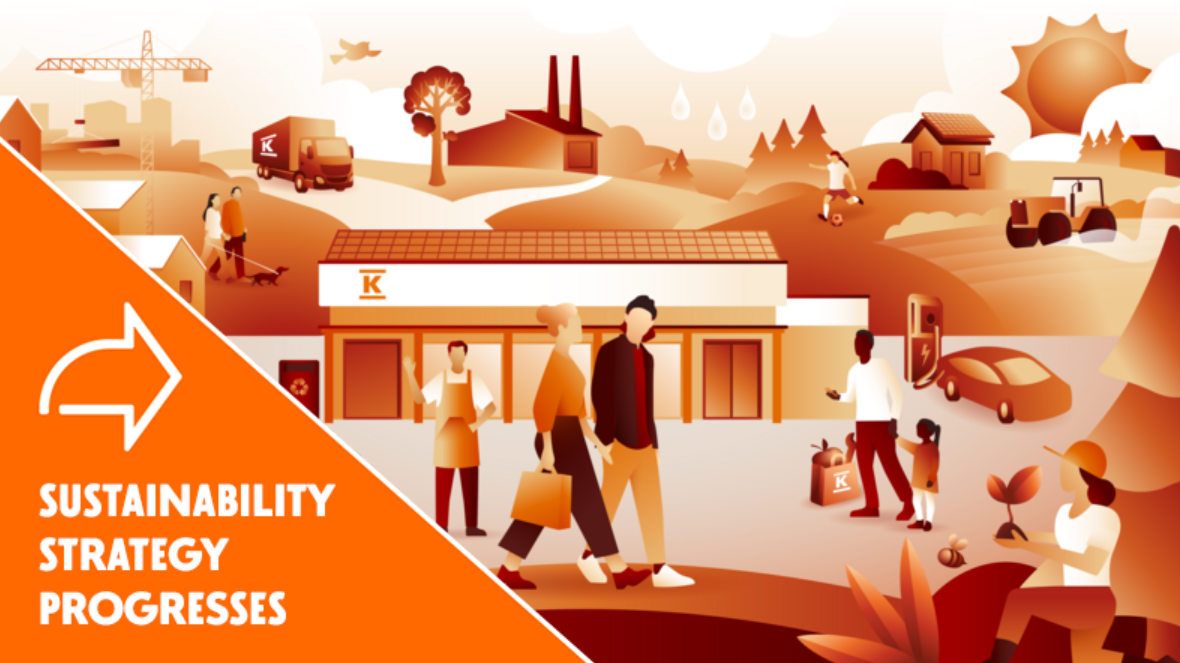
Sustainability work at Kesko is carried out across all divisions in various ways. Our sustainability strategy focuses on the following key themes: climate and nature, value chain, our people, and good governance. In this blog post, we highlight recent progress and plans under each of these themes.
Theme: climate and nature
Reducing emissions
A key priority in our sustainability strategy is advancing Kesko’s emission targets. In January 2026, the international Science Based Targets initiative (SBTi) validated Kesko’s new near-term and long-term science-based emission reduction targets.
“We have a plan extending to 2034 to reduce emissions from our own operations, and we are proceeding according to the plan. Key measures include electrifying logistics and switching to biofuels, improving energy efficiency, and the use of renewable energy. We are also currently preparing a plan to reduce emissions across the value chain. Most of Kesko’s value chain emissions arise over the lifecycle of the products we buy and sell, from production to use and end-of-life treatment. This means cutting value chain emissions will require new measures, and all suppliers will need to be encouraged to join the effort,” says Noomi Jägerhorn, Kesko’s Vice President of Sustainability.
Read more about our emission targets and the plan for emissions from our own operations
Assessing nature impacts
During 2025, Kesko prepared preliminary plans to mitigate biodiversity-related impacts in its value chain. To build a better understanding of nature impacts in the value chain, we also launched a cooperation with an external partner to calculate the nature footprint of our private label products in the grocery trade.
Innovations in circular economy
Kesko and K Group promote the circular economy in many ways: in addition to sorting and recycling in our own operations, we can also encourage consumers to support the circular economy and change their everyday habits. For example, the Rinki eco take-back points located on our store premises make it convenient for customers to recycle while doing their shopping.
“Kesko and K Group stores are taking steps towards achieving the EU target of reducing the use of plastic carrier bags. We are also developing new circular economy solutions, such as the pioneering recycling model for wood packaging waste piloted last year, and the ongoing pilot of reusable take-away containers,” says Jägerhorn.
Read more about the circular economy
Theme: Value chain
Sourcing from near and far
Kesko has several sustainability policies guiding operations and sourcing. Over the past year, these policies have been updated to reflect, among other things, changes in sustainability regulation. Progress under each policy is described in more detail in a table at the bottom of each policy page.
The Pirkka Parhaat small supplier development programme is one example of how we aim to speed up access to store shelves for products from Finnish small food suppliers. Applications for the second programme are open until the end of June. As a result of the first programme, four products were added to our Pirkka Parhaat premium private label range in 2025.
 Noomi Jägerhorn, Kesko's Vice President of Sustainability
A new product will be added to Kesko’s ‘Tracing our products’ website this year: “The website will soon provide our customers with information on the origin of our Pirkka Costa Rica coffee and its journey to our grocery stores. Coffee is one of our most popular products, which is why we want to give customers more information about where it comes from. Coffee production is also facing challenges, as climate change is making cultivation more difficult. We hope that in the coming years we will be able to provide even more detailed information on the origin of our products as data availability improves and technology develops,” says Jägerhorn.
Read more about our value chain and sourcing
Theme: Our people
Towards a more diverse workplace
Kesko’s goal is to increase the share of women in top management to 40% and in middle management to 45% by 2030. During autumn 2025 and the following winter, a women’s leadership incubator programme was organised for the second time together with Mothers in Business (MiB) ry.
“We’ve gotten excellent feedback for the incubator, and it is seen as a good way to support women’s career development. The next leadership programme aimed at women is scheduled to begin later this year,” says Jägerhorn.
Read more about Kesko’s diversity work
Theme: Good governance
New regulation tightening rules on green claims
Changes in sustainability regulation affect Kesko’s operations. One example of regulation that also affects consumers is the EU Empowering Consumers Directive (EmpCo), which affects companies’ marketing and communications and how they can talk about sustainability going forward. Instead of using general claims such as “sustainable” and “environmentally friendly”, companies will need to provide concrete, verified facts about products and services.
“At Kesko, we have been preparing for the legislation, which will start to apply from the end of September, by training our people and the K-retailers, informing our suppliers, and reviewing packaging and website texts. Our goal is to ensure that our products, communication and marketing continue to meet the requirements of the law,” says Jägerhorn.
More information on progress towards the key targets of our sustainability strategy can be found in Kesko’s Annual Report and on our sustainability pages


