
Emissions targets
Science Based Targets initiative (SBTi) has validated Kesko’s new near term and long term science-based emission reduction targets in January 2026.
| Kesko’s new science-based emission targets | |
| Period | Target |
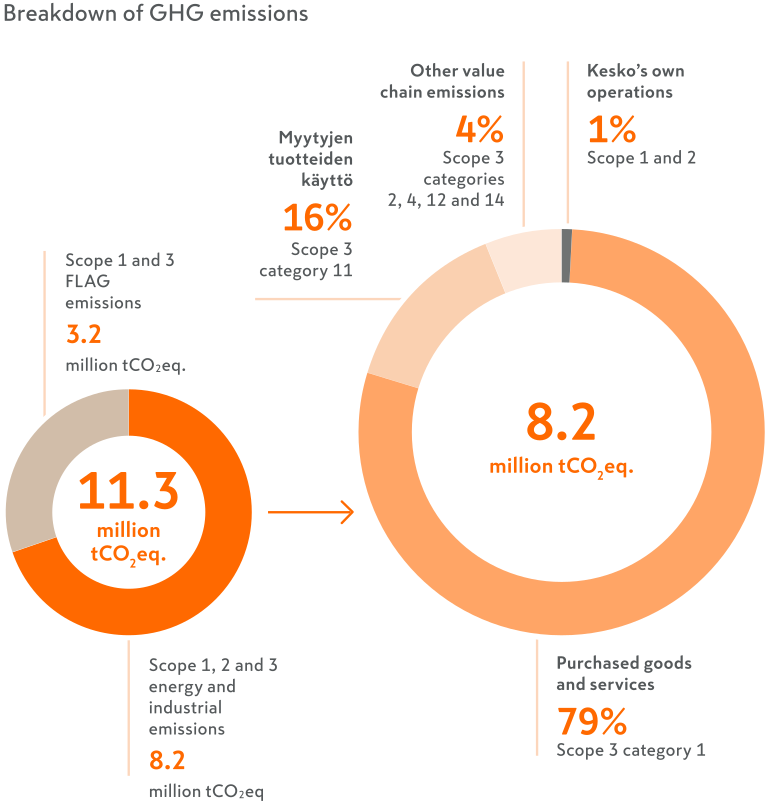
| Near term | Kesko commits to reducing its absolute scope 1 and 2 GHG emissions by 58.8% by 2034 from a 2024 base year. |
| Kesko commits to reducing its absolute scope 3 GHG emissions (from goods and services and use of sold products by 35.0% by 2034 from a 2024 base year. | |
| Kesko commits to reducing its absolute scope 1 FLAG* GHG emissions by 42.4% by 2034 from a 2024 base year. | |
| Kesko commits to reducing its absolute scope 3 FLAG GHG emissions by 42.4% by 2034 from a 2024 base year. | |
| Kesko commits to no deforestation across its primary deforestation-linked commodities after 2025. | |
| Long term | Kesko commits to reducing its absolute scope 1, 2 and 3 GHG emissions by 90% by 2050 from a 2024 base year. |
| Kesko commits to reducing its absolute scope 1 and 3 FLAG GHG emissions by 72.0% by 2050 from a 2024 base year. | |
| Net-zero target | Kesko commits to achieving net-zero GHG emissions across the value chain by 2050. ** |
* SBTi also requires setting Forest, Land and Agriculture (FLAG) targets, if emissions related to forest, land and agriculture account for at least 20% of the company’s total emissions. Kesko has now calculated its FLAG emissions and set targets for them for the first time. In Kesko’s operations, FLAG emissions arise mostly from the primary production of food products.
** The Net-Zero Standard is the most ambitious of the SBTi’s science-based emission reduction standards. With the net-zero criteria, any emissions remaining after a company has achieved its science-based emission reductions must be neutralised in ways that remove carbon from the atmosphere and permanently store it.
Emissions from own operations
The most significant sources of scope 1 and 2 greenhouse gas (GHG) emissions for Kesko are fuel usage in transportation, logistics operations and company cars, and the use of district heat. Key measures to reduce these emissions include electrifying logistics and the use of bio fuels, improving energy efficiency, and the use of renewable energy.
By 2030, electric vehicles are estimated to account for some 30% of the transport fleet in Kesko’s grocery trade. Some 90 K Group grocery stores and 6 Kespro cash-and-carry outlets already employ a heat recycling system that efficiently reduces their heating energy consumption and emissions. We are also exploring entirely new solutions: for example, the K-Supermarket Mankkaa store in Espoo utilises waste heat from a nearby data centre to obtain nearly all the heating energy needed for the store.
Value chain emissions
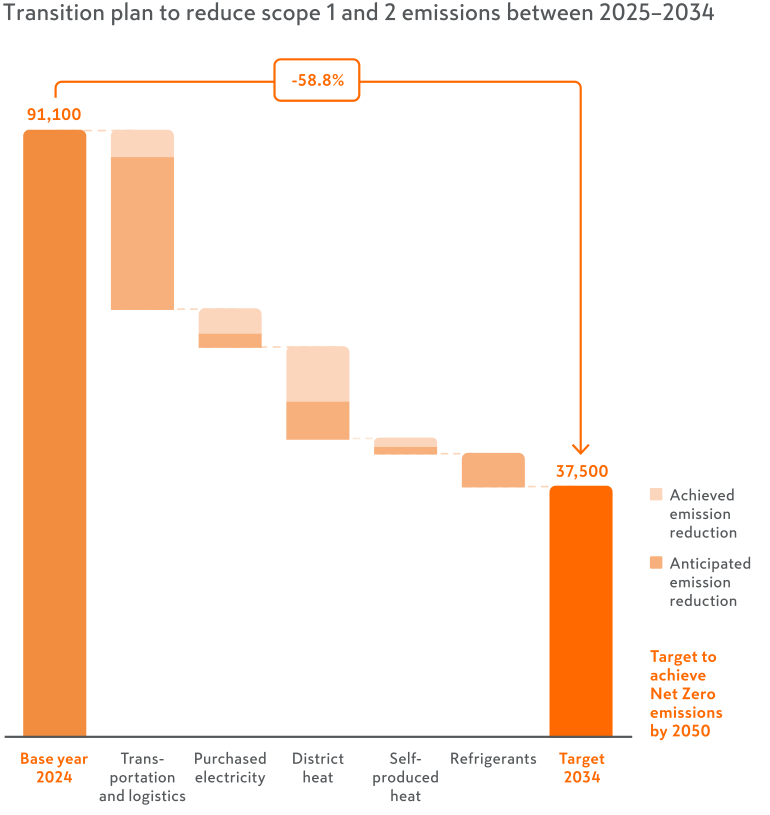
Most of Kesko’s value chain emissions arise during the life cycle of the products we purchase and sell – from their production to their use and end‑of‑life processing. Therefore, a central part of our climate work is encouraging our suppliers to reduce their emissions and inspiring customers to make more sustainable choices.
We challenge our suppliers to emission reductions
In order to reduce the scope 3 emissions, we encourage our suppliers to reduce emissions generated by their own operations and to set their own science-based emission targets.
Kesko's goal is that 67% of our suppliers of goods and services (based on purchases) will set science-based emission reduction targets by the end of 2026. We monitor the progress towards this target through the Target Dashboard on Science Based Targets' website. Measured by spend in euros, 47.0% of our suppliers have set short-term science-based emissions reductions targets.
We also influence value chain emissions by increasing the number of sustainable products in our selections and encouraging customers to choose more sustainable options, for example through the K‑Ruoka app. Products we classify as sustainable include, for instance, plant‑based products in the grocery trade, solar panels and air‑source heat pumps in the building and technical trade, and fully electric vehicles in the car trade.
Kesko's supplier - how to proceed on the path towards science-based emissions targets?
- Commit to setting short-term, science-based emissions reductions targets in accordance with the Science Based Targets initiative.
- Measure your own and your value chain's emissions (scope 1, 2 and 3) and set emissions reductions targets based on SBTi's guidelines.
- Seek for the validation of SBTi for your targets.
Read more about the Science Based Targets initiative.
In 2020, we declared our target of aiming for carbon neutrality for K Group. The operating environment and expectations towards companies have changed, and today, companies are expected to set science-based targets for their own operations as well as their whole value chains.
With our updated sustainability strategy 2024-26, we replaced our previous target regarding carbon neutrality with science-based emission targets. We will also not be offsetting emissions in 2025-2030 as previously planned. Instead, we recognise the need to significantly reduce emissions both in our own operations and throughout the value chain of the products we sell.


