Food waste reduced by one million kilograms – K-food stores’ order volumes managed through forecasting
Food waste reduced by one million kilograms – K-food stores’ order volumes managed through forecasting
23.04.2026
The product selection available on the shelves of K-food stores at any given time is no coincidence. Accurate demand-based forecasting is used to plan the selection and orders – this is the K-food stores’ most important tool for minimising food waste. During 2025, K Group succeeded in reducing food waste by approximately one million kilograms.
K-food stores carry out meticulous work to ensure that the right quantity of the desired products is available at exactly the right time – while keeping waste to an absolute minimum.
“Products are ordered for stores based on forecasts. These forecasts are based on actual sales data, but also take into account trends, campaigns and seasonal variation. The weather also has an impact, and forecasts for the most weather-sensitive product categories are always adjusted according to the latest local weather forecast. For example, if warmer weather is expected for May Day, this will be reflected in forecasts for items such as ice cream and barbecue products. The goal is the same every day: to ensure that our customers have access to the desired products in the right quantities, and that as much food as possible ends up in shopping baskets,” says Timo Jäske, Sustainability Director in Kesko’s grocery trade.
K Group’s goal is to halve its food waste from the 2019 baseline by 2030. By the end of 2025, the amount of food waste had been reduced by one quarter.
Popularity of red-label products has also helped reduce food waste
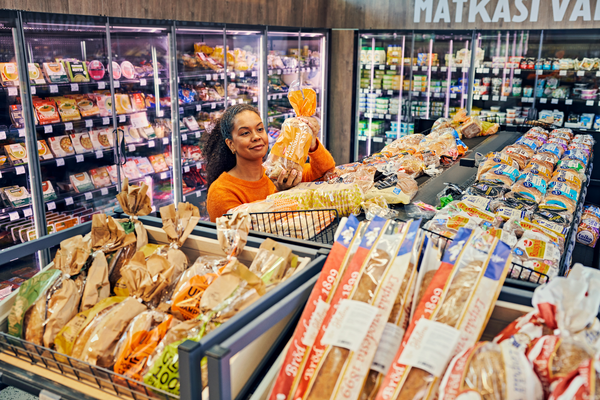
If a product in a K-store is at risk of becoming food waste, its price is reduced. Products approaching their best-before or expiry date are marked with a red discount label and, in many K-food stores they are moved to a special shelf for waste items, to make them easy to find. The popularity of these discounted red-label products has grown significantly in recent years. In 2025, sales of red-label products in K-food stores were more than 40 per cent higher than in 2021. Last year, ready meals and bread were among the most frequently purchased items with red labels.
According to a survey* conducted by K Group, 74% of consumers who buy red-label products do so when they come across a suitable product, 17% actively look for them on almost every shopping trip and 9% visit stores specifically to buy them.
In addition, the majority of K-food stores donate food waste products that are still edible to food aid organisations. Many stores have long-standing partnerships with local food aid distributors.
* K Group carried out the survey through the K Group customer organisation K-Kylä in January 2026. A total of 867 consumers across Finland responded to the survey.

 YES
YES
 NO
NO